
By: Kara Mae Adamo.
Winemaking is an involved, beautiful art form that has taken centuries to evolve to what it is today.
The oldest known winery was found in Ancient Armenia in 4100 BCE.
We didn’t even know about this place until 2007, when a group of UCLA researchers discovered it, alongside the world’s oldest leather moccasin (be still my wino shoe-fanatic heart), in a cave near the village of Areni. In that cave, they found a wine press, storage vessels, drinking cups, and withered grapevines and seeds.
The running theory on this place is that, since they were in a burial site, the wine must have been used as a part of some sort of burial ritual. Because the moccasin was left at the door, it stands to reason that the process must have required those involved to be barefoot out of respect for the dead.
Thanks to that discovery, we can now pinpoint wine’s vintage (heh) at 4100 BCE, making it about 6,000 years old according to our current information.
So, what has it been doing all this time?
Well, it’s kept busy and it’s made a lot of friends.
For one thing, the Egyptians loved it. By 3100 BCE, pharaohs started running the place and they began using wine in their ceremonies. Because it resembled blood, however, the pharaohs themselves generally stayed away from the stuff, believing wine to be, according to Plutarch, (who was quoting Exodus), “the blood of those who had once battled against the gods, and from whom, when they had fallen and had become commingled with the earth, they believed vines to have sprung.”
Undaunted by the blood visual, other Egyptians drank it by the gallon (yum? I guess? Before you judge them too quickly, I’d like to point out that Christians literally call wine the “Blood of Christ” during communion, so I guess it’s just an all-of-us thing). They generally thought drunkenness was what happened when the spirits of those fallen men intertwined with your own.
So, basically, when you were drunk you were possessed…which would honestly explain a lot.

Despite the traditional apprehension regarding wine among pharaohs, when King Tut was discovered, they found no less than 36 wine amphorae (those tall ancient looking jars with the two handles at the neck that we all associate with old-school Greece) bearing the name Rha’y, who was the royal vintner at the time. Talk about branding.
When they opened those jars, they actually found that there was still wine sediment at the bottom. I guess Tut got thirsty in the afterlife.
So, the Egyptians drank wine. Eventually, they started talking to the Phoenicians, who sort of talked to everybody else.
The Phoenicians were known for their roles as middlemen. They traded spices from Arabia, copper from Cyprus, and linen, papyrus, and wine from Egypt.
Before long, everybody was drinking the stuff. From Egypt it branched out in every direction, like a delightful, buzzing web covering the earth.
Archeologists have found evidence of wine’s journey on every single continent, save for Antarctica. Even then, I’m sure people have visited and brought a bottle or two along by now.
The oldest known wine cellar dates back to 1700 BCE and was found in Northern Israel, showing that people back in the Bronze Age were not only enjoying wine, but storing it for later use or to sell. More than 500 gallons of wine were once stored in a room that was connected to this particular palace. That’s enough vino to fill over 3,000 wine bottles.
Quite the collection.
This particular discovery was unique because, inside the jugs, there were traces of herbs, oils, nuts, and wood. So, in other words, the wine was being infused with a variety of ingredients—hinting at the beginnings of ancient mixology.
Throughout the next several centuries, the Phoenicians continued to trade goods and ideas all throughout Eastern Europe and the Middle East. They touched ground in Greece, Italy, North Africa, and even modern-day Israel.
Here, the Jewish people adapted wine to their religious practices. Around the same time, wine became incorporated into the book of Genesis in the Torah. During the story of The Great Flood, Noah gets wasted and exposes himself to his sons. Not his classiest move, but wine can make you do silly things.
A while later, the Greeks began to do what they do best: they began to turn basic winemaking into an art.

During the Hellenistic conquest—around 800 BCE—they began placing significant value on wine. It became a status symbol, indicating a cultural worldliness and wealth most could only dream of.
Then, as per their usual, they assigned it a god: Dionysus.
The Greeks began to colonize and, in doing so, spread the good word of Dionysus throughout the Mediterranean. Every time a new colony was conquered, they would plant grapevines in that area.
It was through this boozy evangelism that Sicily and Southern Italy—chief among Greek city-states at the time—became involved in winemaking. Eventually, wine traveled up through the boot and landed itself in Rome.
A scenic route to be sure.
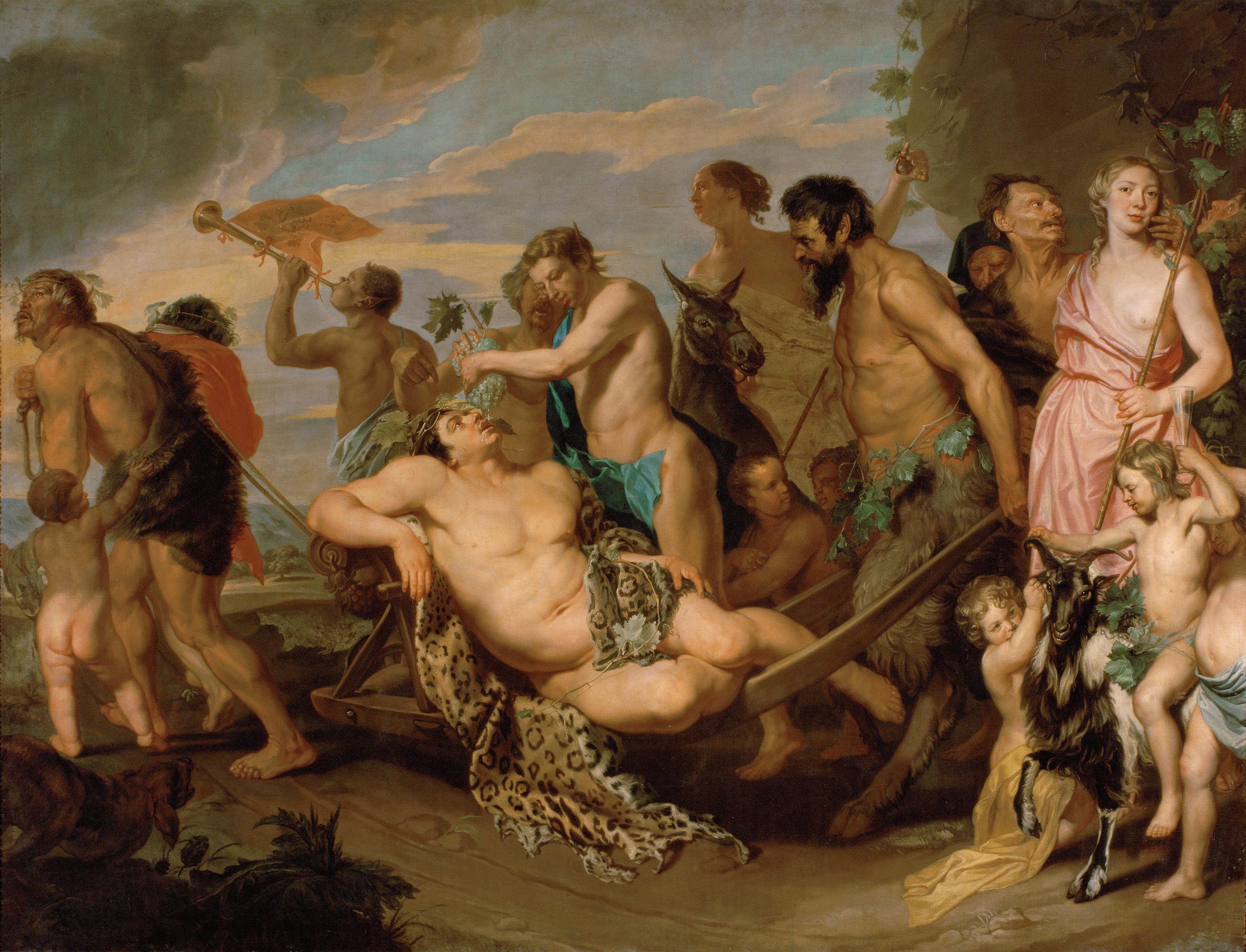
So this brings us to about 140 BCE, when Rome began to really take over. True to fashion, they saw Dionysus, thought he sounded like a cool guy to hang out with, and so they copied him and named this new guy Bacchus.
The Roman relationship with Bacchus was super tight-knit and he became an integral part of Roman culture. This is where winemaking and consumption became a more refined experience: it was the Romans who began studying terroir (the soil, topography, and climate that affects the flavor profiles of different wines), and vintages (the year a wine is bottled). The most famous of these vintages was 121 BCE, and it was apparently out of this world.
The Romans picked up where the Phoenicians left off in terms of spreading the good word of wine everywhere they went. They brought grapevines to France, Germany, Portugal, and Spain—all of which remain key players in the wine business to this day.
...Stay tuned for Wine: a (Very) Brief History, Part 2…
Until next time: stay safe, wash your hands, and find something fun to drink.
Cheers.

Kara Adamo is a bartender, booze nerd, and booze writer. She is the author of Fancy Grape Juice: De-Snootifying the World’s Snootiest Beverage; Artimals: Coloring the Whimsical Wild; and Brews & Hues: A Coloring Book About Beer. Adamo currently lives in Washington DC. She teaches online mixology courses and is currently working on the 2nd edition of Fancy Grape Juice. Stay tuned for her Drunken Nomads podcast, set to be released this fall.
 Karita's Travels