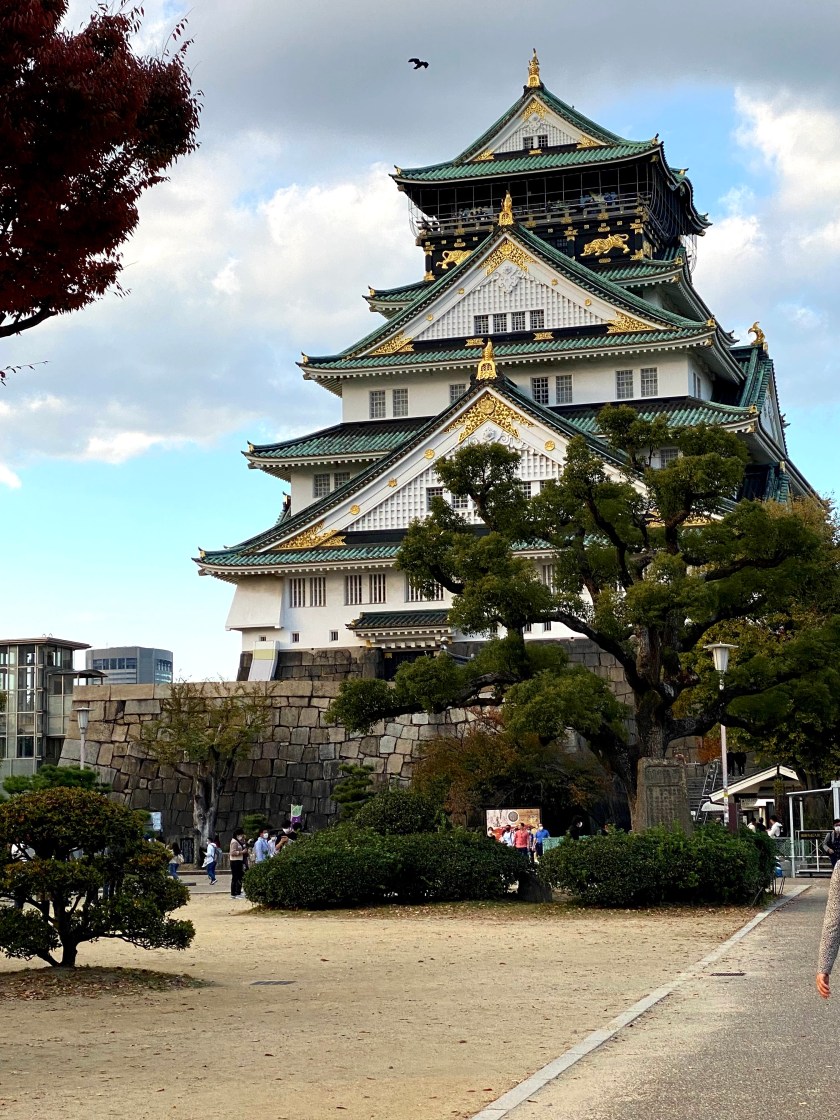
Japan opens its doors
By: Kara Mae Adamo
It’s been 2 years since tourists have touched ground in Tokyo’s Haneda airport.
2 years of quieter streets…of fewer languages flooding Pontocho Alley…of members of the global community wandering Kyoto’s bamboo forests or gazing in awe at the fantastical bursts of pink and white that come with the cherry blossoms in early spring.
Even as the rest of the world slowly opened up…cautiously inching its way outside again, reacquainting itself with a version of life the way it used to be…Japan rested in relative isolation. Closed off from the masses, it chose to continue protecting its people from the unknowns of interacting during a global pandemic.
But, it’s been 2 years…and a small island can only sustain itself for so long.
The truth is, Japan needs the tourism.
The yen is down 30%. Kyoto, as a city, may even have to file for bankruptcy if something doesn’t change soon. As such, Prime Minister Fumio Kishida actually traveled to NYC personally this summer to announce, at the NY stock exchange, that they were reopening.
The four of us: Joel, his wife Laura, our friend Jeremy, and I, have been waiting in the wings.
Every board game night, we’d talk about it…every other link in the group chat revolved around it. We ate Japanese snacks out of a subscription box Joel and Laura bought for their kids…Jeremy would delve into all of the cultural details he remembered from his last two trips and would make lists based off of what he thought the rest of us would enjoy.
The boys had visited a few years ago–along with another friend of ours, John–for a guys’ trip on Joel’s 40th birthday and absolutely loved it. They decided pretty fast that they were coming back. Jeremy planned for a similar trip for his own 40th, and this time we girls were invited along for the ride.
But then a pandemic happened and the world went dark, so postponements had to be made. This year, however, the boys watched Japan’s press releases like hawks, and quickly anticipated that the looming financial crisis would be the tipping point.
We knew in advance that things would likely change by mid-October, and so we rolled the dice and booked our accommodations before they even officially made the call.
Sure enough, on October 11th, Japan finally opened its doors to the rest of the world.
We wasted zero time waiting around because, I mean, we’ve waited enough.
Jeremy flew out just on Halloween; the rest of us flew out on November 1st. He’s already there and we’re on our way–set to touch down on November 3rd, once you factor the 13 hour time difference. We’ll all be there until November 14th.
We figured beating the masses was a good idea. Besides, we want to go and, like I said, Japan needs the tourism. Everybody wins and I get to eat my body weight in sushi and ramen.
There are, however, a number of hoops you have to jump through if you’re gonna make the trek.
Covid
Japan is super conservative about their approach to Covid…even now, in November, 2022.
I’m not gonna get into the politics of this one way or the other. I’m just letting you know: you’ll have to wear a mask everywhere, vaccinated or not.
I liken it, somewhat, to the hoops we had to jump through in Hawaii back in January, 2021. If you think about it, the concern does make sense. Islands are isolated and their populations are vulnerable whenever any sort of sickness spreads because there’s really nowhere to go.
As such, Japan requires all travelers coming in to either show proof of all three shots (the first two and the booster) or provide a negative COVID test, and risk a mandatory quarantine during your vacation pending on health status.
You WILL need your vaccination card to prove you’ve had your shots–I highly recommend grabbing one of the new passport books that includes a little sleeve specifically for this purpose. I keep mine in there permanently, as the vinyl protects what is–incomprehensibly–still just a piece of paper with handwriting on it nearly 2 years into this thing.
You should also just sort of have that card on-hand in case anybody asks to see it. Hate the idea? I get that. But those are their rules.
Personally, I don’t really have a problem with it. I’d rather help protect a culture of people than not and it’s really not a huge inconvenience. Besides, I have a ton of masks at home that I haven’t really needed to use in a hot minute. So I’m masked-up, vaxxed up, and ready to gorge myself on ALL OF THE RAMEN AND SUSHI. Small price to pay for what’s about to be a fucking epic trip.
Booking places to stay
In Japan, location is everything. You’re gonna walk basically everywhere, so I’d recommend looking at the things you want to do first, prioritizing them, and then booking your hotels, etc. according to the proximity to those things.
To book our accommodations, we chose to go through Agoda.
A hybrid between Airbnb and Travelocity, Agoda provides options for you to be able to book without paying right away. They won’t charge your card until 5 days before your arrival and free cancelation is available up until that 5-day mark.
Plus, since they don’t take as much of a chunk off the top, a lot of the exact same places you’ll find on Airbnb will be listed on Agoda for cheaper.
In Osaka, we chose to stay right downtown, close to the metro, at the Dormy Inn Premium Namba. If you get there too early, you’ll be able to leave your luggage at the front desk. If you come back a couple hours past checkin and don’t see your bag, don’t panic: they’ve probably already been brought up to your rooms.
In Kyoto, we booked a townhouse that was built out of an old machiya, overlooking the Kamo River. The apartment–run by a company called Resistay–is about a 15 minute walk from Pontocho Alley and Nashiki Market. It also features a washer and dryer, as well as a kitchen.
In Tokyo, we booked another hotel–called La’gent Hotel Shinjuku Kabukicho–located in a ward called Shinjuku.
ProTip: Take screenshots of your booking information. The wifi in Japan is super hit-or-miss, and it’s gonna save your some time and frustration when you’re checking in.
Booking our flights
Sometimes, it helps not to book a round-trip ticket…or even to book a direct flight.
We figured out that, if we travel to LA after work and then fly to Tokyo three hours later, we’ll actually align our internal clocks pretty well. We also gain an extra day without Laura and I having to take an additional day off of work. This helps, since Japan is 13 hours ahead of EST.
So, we’re taking off at 7:30pm in Orlando, flying to LA, leaving around 1am local time, and landing in Tokyo at around 5:30am (Tokyo time). A quick 1 hour flight brings us to Osaka, where we’ll begin our trip.
Jeremy is already in Japan, waiting for the three of us. He took a flight to Chicago a day earlier than us and from there, flew to Tokyo on JAL.
Joel, Laura, and I all flew United on our flight to LAX. Once we were there, we grabbed our checked bags, walked outside of the arrivals section of the airport, went back in and up the elevator to the second floor, and entered the departures section for ANA airlines (basically American Airlines’ Japanese counterpart).
We did have to do TSA all over again, and we did have to check our bags for this flight separately, but gaining the extra day and resetting our circadian rhythms was worth the extra effort.
Joel’s TSA precheck didn’t work out for some reason and I still haven’t gotten mine because my attempts at getting an appointment keep getting thwarted by my forgetfulness, work conflicts, and even a hurricane coming in and closing the office down. For as much as I fly, you’d think I’d have done it by now, but no dice.
I hear TSA Pre with Global is the way to go and that’s probably what I’ll do.
Now, a note about buying the tickets themselves:
I cannot stress this enough…I paid literally less than $500 roundtrip for all of these flights. There weren’t any special deals or anything. I used my Capital One points from my Venture card and booked through their travel service, which is located within the app. Any issues I’ve ever had with hotel bookings, car rentals, flights, etc are handled via Capital One representatives and it’s like having your own personal travel agent in your back pocket. I will shout their praises until kingdom-come.
A helpful hack on racking those miles up, btw: if you’re renting an apartment, you can pay for it with your card and then immediately pay it off. There’s usually some sort of fee to do that, but when you factor in the mileage conversion on the Venture card, you can probably still come out on top.
Even if you don’t pay your rent with the card (I actually haven’t been because my rent is automatically withdrawn from my bank account and I just haven’t switched it yet), you can still benefit from the points conversion. I’ve only had this card since April or May and it’s already MORE than paid off for me. It’s like any other card: use it to buy the things you were gonna buy anyway and don’t wait to transfer the money, so you’re not paying crazy interest, and wa-la! A nearly free trip to Japan, or wherever else you wanna go.
Also! Since booking the tickets, we’ve seen a lot of deals coming in to bring people into Japan, so keep an eye out.
Staying in touch
When traveling internationally, there are a couple of options for you. I suggest downloading either Signal or Whatsapp.
These are encrypted apps that allow you to chat all over the world–a great way to stay in touch with your travel buddies AND with your loved ones back home.
If you have an Android phone, internet will be a lot easier to access because Google Fi offers incredible international phone plans that include hotspot tethering. It’s available in over 200 countries, including Japan.
Sadly, this is truthfully an area where my beloved Apple seems to fall short. My plan with AT&T, however, does offer phone service for $10 a day for up to 10 days, so I could at least text or call someone if I needed to.
The MySoS app
This is where you have to upload your covid card and wait for a physical person on the other end to manually accept your application to travel there (see instructions below)
From the home screen of the MySoS app:
- Select Account Registration.
- If you’re vaccinated, you’ll see a digital form appear on the screen asking you to enter the following:
- Passport Number
- Passport Number (again)
- Date of Birth
- Date of Birth (again)
- Surname (your last name)
- Given name (I recommend adding your middle name to your first name if you have one…make it match your passport to the best of your ability)
- Select Register.
- The screen will be red.
- Select Pre-registration for Quarantine Procedures.
- It will tell you if your documents have been received. It asks that you wait until the app updates with the outcome.
- Once the screen turns blue (hopefully!!) it will tell you that you are good to go and that you’ll need to show that screen when boarding and upon arrival in Japan.
The ANA app
From the home screen of the ANA app:
- Select Log in.
- Select Online Check-in.
- Select Online Check-in (yes, again).
- Select Next (unless you have a Redress Number or Known Traveler Number…I didn’t, so I just skipped it and went on to the next screen.)
- Take a screenshot of your itinerary if you want. It never hurts in case the app crashes. I do this for most travel and financial apps.
- Select Issue Boarding Pass.
- Add it to your Apple or Google Wallet.
Money talk

Japan is, depending on where you go, a largely cash-based society, though this has certainly changed drastically since Covid.
You’re gonna want to hit up an ATM once you get off the plane and take out some money. ATMs here are limited to 50,000 yen at a time, which (for today’s exchange rate) equates to $340.15, and I definitely taking out the max. You never know when you’re gonna see another ATM.
I wouldn’t bother with ATM withdrawals until you get to Japan, though. That exchange rate is a lot better going in.
Also: Coins are definitely more helpful here than they are in the US. Between the vending and Gachapon machines (more about those later) or even the metro, you’ll blow through them faster than you’d think. I find myself trying to break bills a lot more here than I do back home.
All of that said, credit cards are more widely accepted now than they were when my travel companions where here 3 years ago, so even if you find yourself cashless for a moment, you should be fine.
The language barrier
As per the usual, more people are multilingual here than they are back home. I’ve noticed that almost everyone seems to at least know a few words in English, if they aren’t nearly fluent.
Even if someone can’t understand you–or if you can’t understand them–there’s Google Translate.
I recommend familiarizing yourself with this app early on, because it’s a damned lifesaver. Between translating what someone says into a microphone and the amazing Augmented Reality option of scanning printed Japanese with your phone and having it show up on the screen in English, it’s really incredible how easy things are to navigate and understand.
That of course doesn’t mean you should forgo the classic Japanese-to-English dictionary. People of all cultures appreciate when someone makes the effort to learn their language and doing so will only enrich your own experience.

Kara Adamo is a globe-trotting ex-bartender, booze nerd, and booze writer. She is the author of Fancy Grape Juice: De-Snootifying the World’s Snootiest Beverage; Artimals: Coloring the Whimsical Wild; and Brews & Hues: A Coloring Book About Beer. Adamo is also a UX writer and UX designer. She is currently working on the 2nd edition of Fancy Grape Juice.
 Karita's Travels
One comment